Source 100g qsfp28 optical transceiver for Data Centers, Routers, and Switches
Explore 30 listings for the 100g qsfp28 optical transceiver designed for data centers, routers, and switches. Buyers can compare specifications like 100Gbps data rates, 850nm wavelength, and MPO-12 connectors to find suitable options for high-speed interconnections.
Key considerations
Products List




Comprehensive Sourcing Guide
Strategic Sourcing Guide for 100G QSFP28 Optical Transceivers
The procurement of 100G QSFP28 optical transceivers represents a critical decision point for organizations modernizing data center infrastructure and high-speed network backbones. As network demands escalate, the transition from 40G to 100G architectures necessitates a rigorous understanding of component specifications, compliance frameworks, and supply chain reliability. This guide provides a structured approach to sourcing these high-performance modules, ensuring that buyers can make informed decisions based on verified technical attributes and market realities without relying on unverified claims.
Technical Architecture and Performance Specifications
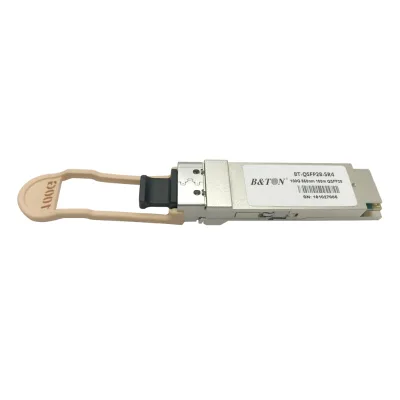
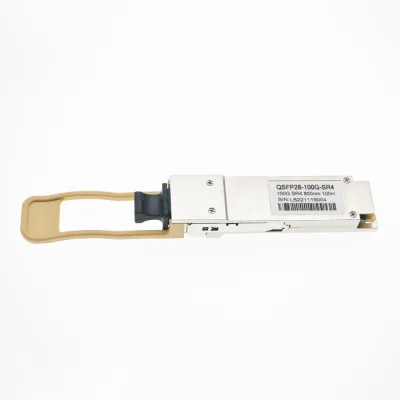
Understanding the technical underpinnings of the 100G QSFP28 transceiver is the first step in any sourcing strategy. These modules are designed to support high-speed data transmission, typically operating at a data rate of 100Gbps. The form factor, QSFP28, allows for a compact design that supports high port density in switches and routers. A key observation in the current market is the variation in transmission distances and media types. Some units are engineered for short-range applications, with specifications indicating a distance of up to 100 meters, often utilizing multimode fiber with MPO-12 connectors. These are ideal for intra-data center links where space is at a premium.
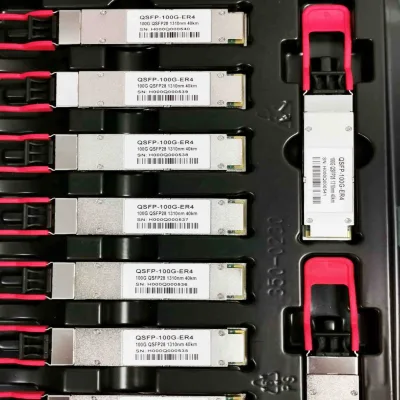
Conversely, other configurations are built for longer-haul connectivity. Specifications for certain models indicate distances reaching 40 kilometers, utilizing single-mode fiber and LC Duplex connectors. The optical wavelength for short-range variants is typically observed at 850nm, which is standard for multimode applications. For longer distances, the technology often shifts to more complex modulation schemes. Some advanced units utilize EML (Electro-Absorption Modulated Laser) technology with LWDM (Long Wavelength Division Multiplexing) to achieve high data rates over extended distances. The electrical interface is a critical component, often standardized as a 4x25G electrical interface, which breaks down the 100G aggregate data rate into four parallel channels. Buyers must verify that the selected module matches the specific distance and connector requirements of their network topology, as mixing incompatible fiber types or connector styles can lead to significant deployment failures.
Compliance, Certification, and Regulatory Standards
In the global electronics supply chain, compliance is not merely a formality but a prerequisite for market entry and operational stability. When sourcing 100G QSFP28 transceivers, buyers must verify that products adhere to internationally recognized safety and environmental standards. The most frequently observed certifications in this sector include ISO, CE, FCC, and RoHS. These certifications indicate that the product meets specific requirements regarding electromagnetic compatibility, safety, and the restriction of hazardous substances.
Specifically, RoHS compliance is a critical standard, often cited as "RoHS Compliant" or "RoHS 6 Compliant," ensuring the device is free from restricted materials such as lead, mercury, and cadmium. The presence of ISO certification suggests adherence to quality management systems, while CE and FCC marks are essential for selling and operating within the European Union and North America, respectively. Buyers should request valid certification documentation from suppliers rather than relying on marketing claims. It is important to note that while many products list these certifications, the specific version or standard (e.g., RoHS 6 vs. RoHS 10) can vary. Verification of the exact standard is necessary to ensure compatibility with local regulations and corporate sustainability policies. Additionally, while some background information mentions REACH, buyers should treat this as a variable to be confirmed on a case-by-case basis rather than a universal attribute of all listed products.
Cost Drivers and Pricing Dynamics
The pricing of 100G QSFP28 optical transceivers is influenced by a complex interplay of factors, including the optical technology used, the transmission distance, and the volume of the order. The observed price range in the market is broad, spanning from approximately $1 to $1375 per unit. This wide variance reflects the difference between basic short-reach multimode modules and complex long-reach single-mode solutions. Short-range modules, often used for rack-to-rack connections, tend to be more cost-effective due to the maturity of the technology and lower component costs. In contrast, long-reach modules requiring EML lasers and advanced dispersion compensation command a premium price.
Minimum Order Quantity (MOQ) is another significant cost driver. The market shows an MOQ range from 1 unit to 100 units. For small-scale deployments or testing phases, suppliers offering an MOQ of 1 are essential, allowing buyers to validate performance without a large capital outlay. However, for large-scale data center rollouts, negotiating an MOQ of 100 or higher can often unlock volume discounts that significantly reduce the per-unit cost. Buyers should also consider the packaging specifications, which can range from individual boxes for single units to blister boxes containing 10 pieces. Bulk packaging not only reduces shipping costs but also streamlines the inventory management process. Understanding these variables allows procurement teams to optimize their budget while ensuring they receive the correct technical specifications for their specific application needs.
Typical Applications and Deployment Scenarios
The versatility of the 100G QSFP28 transceiver makes it suitable for a wide array of high-performance networking environments. The primary application is in data centers, where the demand for high bandwidth and low latency is paramount. These modules are integral to 40G and 100G Ethernet links, facilitating high-speed interconnections between switches, routers, and servers. In modern data center architectures, they support 4x25G electrical interfaces, enabling efficient aggregation of traffic.
Beyond the data center, these transceivers are increasingly deployed in metro networks and telecommunications infrastructure. Applications include 40G Base-Er4 Ethernet links and high-speed interconnections for service providers. The specific model numbers, such as T-OD170, T-OD171, T-OD175, T-OD176, T-OD177, and T-OD180, often correspond to specific use cases ranging from data center switches to metro network routers. The choice of connector type is also application-dependent; MPO-12 connectors are standard for high-density multimode applications, while LC Duplex connectors are preferred for single-mode long-reach links. Furthermore, the power supply requirements, typically 3.3V, must be compatible with the host equipment's power delivery system. Whether the application involves telephone networks, mobile phones, servers, workstations, or laptops, the transceiver must be selected to match the specific interface and speed requirements of the end device.
Supplier Evaluation and Origin Verification
When evaluating potential suppliers, buyers must look beyond the product specifications to the origin and reliability of the manufacturer. The majority of 100G QSFP28 transceivers in the current market originate from China, with specific regions like Guangdong and Shenzhen being prominent hubs for electronics manufacturing. These locations are known for their robust supply chains and manufacturing capabilities. However, the presence of a product labeled "Made in China" does not guarantee uniform quality. Buyers should verify the specific brand names associated with the products, such as BTON, and cross-reference them with the manufacturer's reputation and history.
Supplier evaluation should also include an assessment of their customization capabilities. Many suppliers offer customization options, allowing buyers to tailor products to specific network requirements. This flexibility is crucial for unique deployment scenarios. Additionally, the condition of the product is a vital factor; buyers should ensure that all units are listed as "New" to avoid the risks associated with refurbished or used equipment. The selling units should also be clearly defined, with options for single-item purchases or bulk orders. By thoroughly vetting the supplier's location, brand reputation, and customization offerings, buyers can mitigate the risks of supply chain disruptions and ensure a steady flow of high-quality components.
Quality Control and Long-Term Procurement Considerations
Ensuring the long-term reliability of 100G QSFP28 transceivers requires a robust quality control strategy. One of the key indicators of product longevity is the warranty period. In the observed market, a warranty time of 3 years is a common standard, offering buyers a significant buffer against early failures. This warranty period should be clearly documented in the procurement contract, outlining the terms for replacement or repair in case of defects. Buyers should also verify the product's condition and packaging standards, ensuring that units are shipped in protective packaging, such as cartons, to prevent physical damage during transit.
Long-term procurement considerations also involve the standardization of components. Adhering to standards such as 100G and 40G ensures interoperability across different network equipment. Buyers should prioritize suppliers who can provide consistent quality across multiple batches, as this reduces the complexity of network management and troubleshooting. The information content of the product, typically data transmission, must be reliable over the product's lifespan. Furthermore, the speed capabilities, such as up to 11.2 Gbps per channel bandwidth, must be maintained consistently. By focusing on suppliers with a track record of quality, clear warranty terms, and adherence to industry standards, organizations can build a resilient network infrastructure that supports their growth and operational needs for years to come.
Comparative Analysis of Key Product Attributes
To facilitate a clearer understanding of the differences between various 100G QSFP28 transceiver models, the following table summarizes the key attributes observed in the market. This comparison highlights the diversity in specifications, helping buyers align their procurement choices with their specific technical requirements.
| Attribute | Short-Range Variant | Long-Range Variant | General Standard |
|---|---|---|---|
| Distance | 100M | 40KM | Variable |
| Connector Type | MPO-12 | LC Duplex | Dependent on Model |
| Wavelength | 850nm | Variable (LWDM) | 850nm or Single-Mode |
| Data Rate | 100Gbps | 100Gbps | 100Gbps |
| Interface | 4x25G Electrical | 4x25G Electrical | 4x25G Electrical |
| Certification | ISO, CE, FCC, RoHS | ISO, RoHS, CE | ISO, RoHS, CE, FCC |
| Warranty | 3 Years | 3 Years | 3 Years |
| Power Supply | 3.3V | 3.3V | 3.3V |
| Application | Data Centers | Metro Networks, Data Centers | Data Centers, Switches |
| Model Examples | BT-QSFP28 | BT-QSFP28+-SR | T-OD Series |
This table illustrates that while the core data rate and power requirements remain consistent, the physical layer specifications vary significantly based on the intended application. Buyers must carefully match these attributes to their network design to ensure optimal performance and compatibility.
Final Procurement Recommendations
In conclusion, sourcing 100G QSFP28 optical transceivers requires a balanced approach that combines technical due diligence with strategic supplier evaluation. Buyers must prioritize verifying the exact specifications, such as distance, connector type, and wavelength, against their network requirements. Compliance with international standards like ISO, CE, and RoHS is non-negotiable for ensuring regulatory adherence and product safety. The wide price range and MOQ flexibility offer opportunities for cost optimization, but these must be weighed against the need for quality and reliability. By focusing on suppliers with a proven track record, clear warranty terms, and a commitment to quality control, organizations can secure a robust supply of high-performance transceivers. Ultimately, the success of the procurement process lies in the ability to match the specific technical attributes of the transceiver with the unique demands of the deployment environment, ensuring a seamless and efficient network infrastructure.
FAQs
What is the data rate of the 100g qsfp28 optical transceiver?
The data rate is 100Gbps. This module supports high-speed transmission using a 4x25G electrical interface, making it suitable for data centers and high-speed interconnections.
Which connector types are available for these transceivers?
Available connector types include MPO-12 and LC Duplex. The MPO-12 is typically used for short-range applications, while the LC Duplex is standard for long-distance single-mode links.
Can I find 100g qsfp28 optical transceiver with 3 year warranty?
Yes, a 3-year warranty is a common standard for these products. Buyers should verify the warranty terms in the contract to ensure coverage against defects and early failures.
What certifications do these optical modules typically hold?
These modules typically hold ISO, CE, FCC, and RoHS certifications. RoHS compliance ensures the device is free from hazardous substances, while ISO indicates adherence to quality management systems.
How far can the 100g qsfp28 optical transceiver transmit data?
Transmission distances vary from 100 meters to 40 kilometers depending on the model. Short-range variants use 850nm wavelength for intra-data center links, while long-range units support extended distances.
What is the power supply requirement for this transceiver?
The power supply requirement is 3.3V. This standard voltage ensures compatibility with most host equipment power delivery systems in switches and routers.
Which models support 40g Ethernet applications?
Models such as T-OD170 and T-OD175 support 40g Ethernet applications. These are designed for use in data centers, metro networks, and high-speed interconnections.
Can the product be customized for specific needs?
Yes, customization is available for specific network requirements. Buyers should verify the customization options with the supplier to ensure the product matches their unique deployment scenarios.